Efficiency of MPAs in Sri Lanka
Name of the project: Evaluation of the efficiency of marine protected areas of Sri Lanka
Collaborators: Terney Pradeep Kumara (University of Ruhuna, Sri Lanka), Chanaka Sooriyabandara (Blue Resource Trust, Sri Lanka), Jeff Nekola (Masaryk University, Czech Republic)
Preliminary results were presented on Zoological days 2023, European Conference of Tropical Ecology 2023 and Conference of the Czech Society for Ecology 2022.
All materials on this page are shared under a CC BY-NC-ND 4.0 license. Find more information at https://creativecommons.org/licenses/by-nc-nd/4.0/.
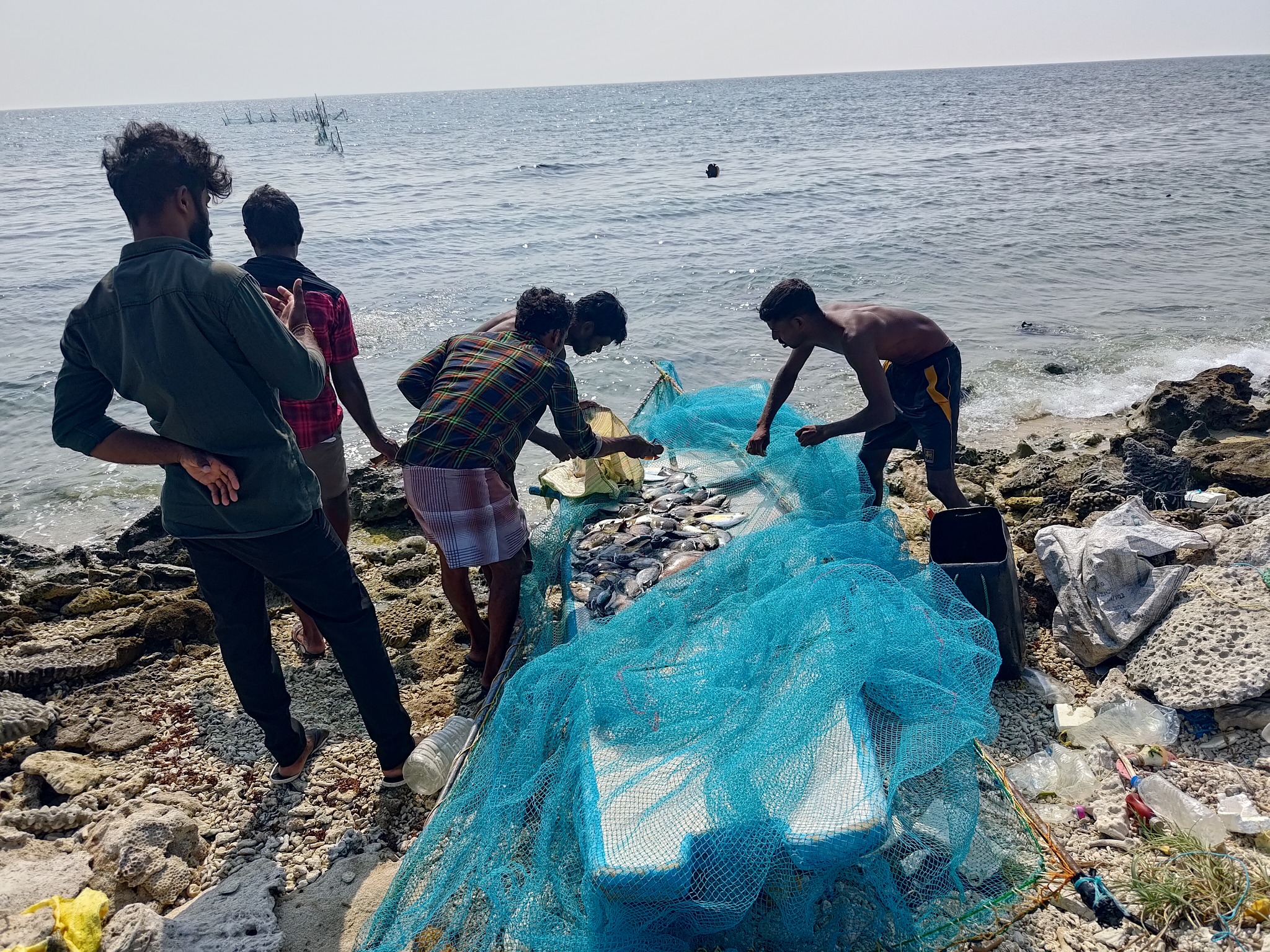
Many tropical countries experiencing high rates of biodiversity loss are heavily dependent on marine resources, with Sri Lanka being no exception. Local coastal ecosystems are under serious threat and experiencing biodiversity loss, leading to reduced incomes in adjacent human communities. Marine Protected Areas (MPAs) are a widely used conservation tool to address such threats. However, there can be considerable discrepancy between areas reported as MPAs vs. those that are actually effectively engaged in conservation. Protected areas that are only designated but have inadequate protective measures are mere “paper parks,” providing only the impression of conservation.
We became concerned by the potential existence of paper parks among the declared MPAs in Sri Lanka through personal experience and conversations with local conservation practitioners. Even though the status of reefs and other coastal areas in Sri Lanka is relatively well documented in older reports, a recent overview of MPA status is lacking. Perera and de Vos (2007) provided the most comprehensive work covering the history, legal framework, status, and threats, emphasizing the consequences of the 2004 Boxing Day tsunami.
An evaluation of the current effectiveness of the MPAs is needed to improve conservation practices. We apply a methodology inspired by Grorud-Colvert et al. (2021) to identify the biggest threats and acute problems of each MPA, as well as their level of implementation. This allows us to estimate how many Sri Lankan MPAs are likely to promote biodiversity. We also consider how harmful activities may vary among differing types of MPAs. Finally, we identify the management practices and knowledge gaps that prevent more effective planning and management. From this, we make suggestions regarding how the Sri Lankan MPA legal and management system can be improved.